
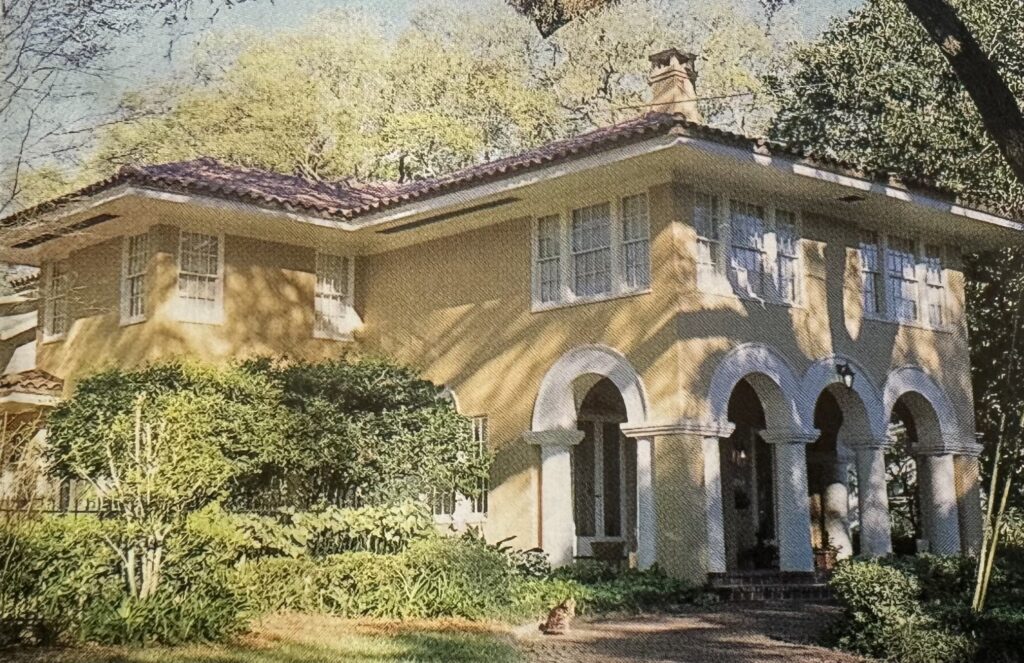
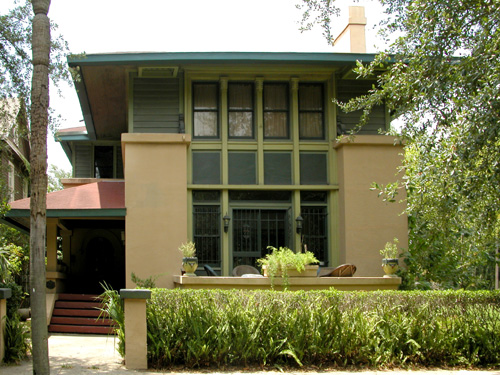
Above: 1855 Ingleside Avenue from the 27th Annual RAP Home Tour guide, c. 2000.
by Elaine Slayton Akin, RAP Contributor
It’s quite common for us to begin identifying the right properties for the RAP Home Tour months if not years in advance, so in early 2025 when we began considering 1855 Ingleside Avenue for a future Home Tour due to its sprawling elegance and community-minded owners, we naturally started digging around its historical footprint. RAP’s site files, gathered as required materials for Riverside and Avondale’s application to the National Register of Historic Places in 1985 and 1989, respectively, are always low-hanging fruit for a good starting point.
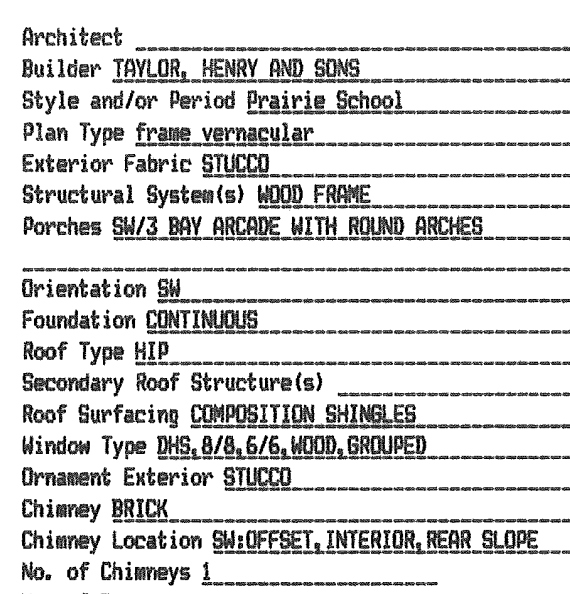
We were quickly confused, however. The site file for 1855 Ingleside Avenue described the architectural style for the home as “Prairie School,” but many subsequent narratives described it as “Italianate” or “Mediterranean Revival,” including those in previous RAP Newsletters and the 2001 RAP Home Tour guide. We felt something must be off about the site file, even entertaining the idea that it could be for a different home entirely.
Page from site file for 1855 Ingleside Avenue, 1989, courtesy Riverside Avondale Preservation.
Prairie School Origins in Jacksonville
The site files were digitized years ago, and so RAP’s electronic database provides an easy first look, but with the seeming file swap, we thought it important to reference the hard file in archival storage. There, we found a photo that had not been included in the digital copy, allowing the puzzle pieces fall into place for the architectural history of 1855 Ingleside Avenue.
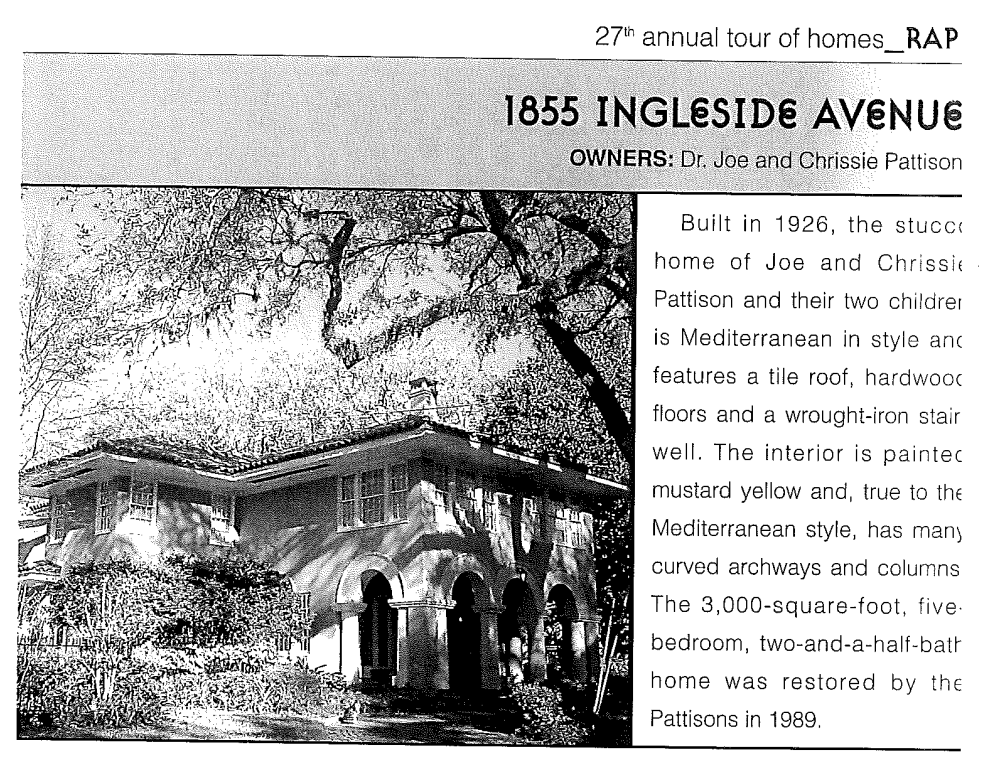
1855 Ingleside Avenue from the 27th Annual RAP Home Tour guide, c. 2000.
Left to right: 2981 Riverside Avenue (built 1916 by Ransom Buffalow; 30 West 9th Street (built 1908 by Henry Klutho), courtesy The Prairie School Traveler.
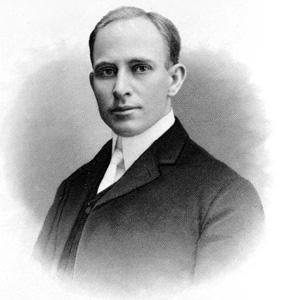
But let’s back up for a moment. Thanks to the modern influence of noted architects such as Ransom Buffalow (1861–1922) and Henry John Klutho (1873–1964), who arrived in Jacksonville from other metropolitan areas to help rebuild the city after the Great Fire of 1901, Riverside and Avondale are now sprinkled with the Klutho- and Buffalow-championed Prairie School style of building.
Henry John Klutho portrait, public domain.
Signature characteristics of the Prairie School style include horizontal lines, flat or hipped roofs with broad overhanging eaves, windows grouped in horizontal bands, solid construction and craftsmanship, and integration with the landscape—a trait particularly associated with the pioneering Frank Lloyd Wright. For architects like Klutho and Buffalow, the Prairie School style was particularly adaptable to the humid Florida climate with key features: emphasis on natural ventilation with open floor plans and the use of courtyards, elevated foundations, deep shade through architectural features and landscaping, and durable materials.
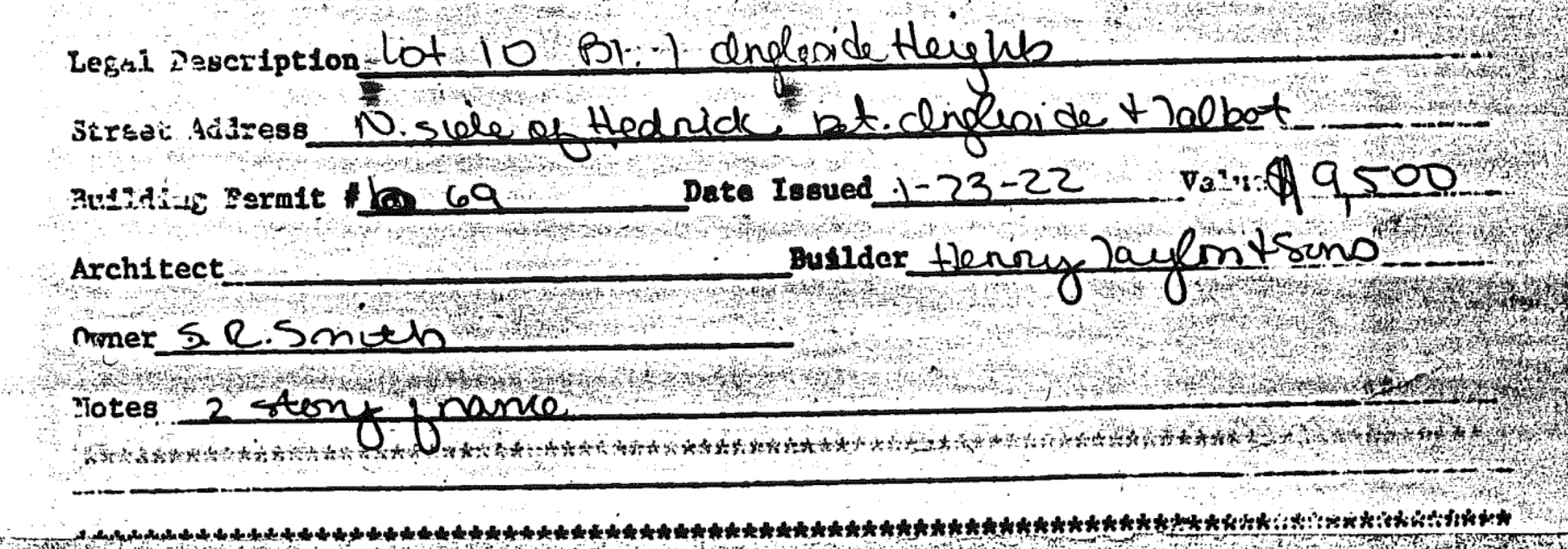
Page from site file for 1855 Ingleside Avenue, 1989, courtesy Riverside Avondale Preservation.
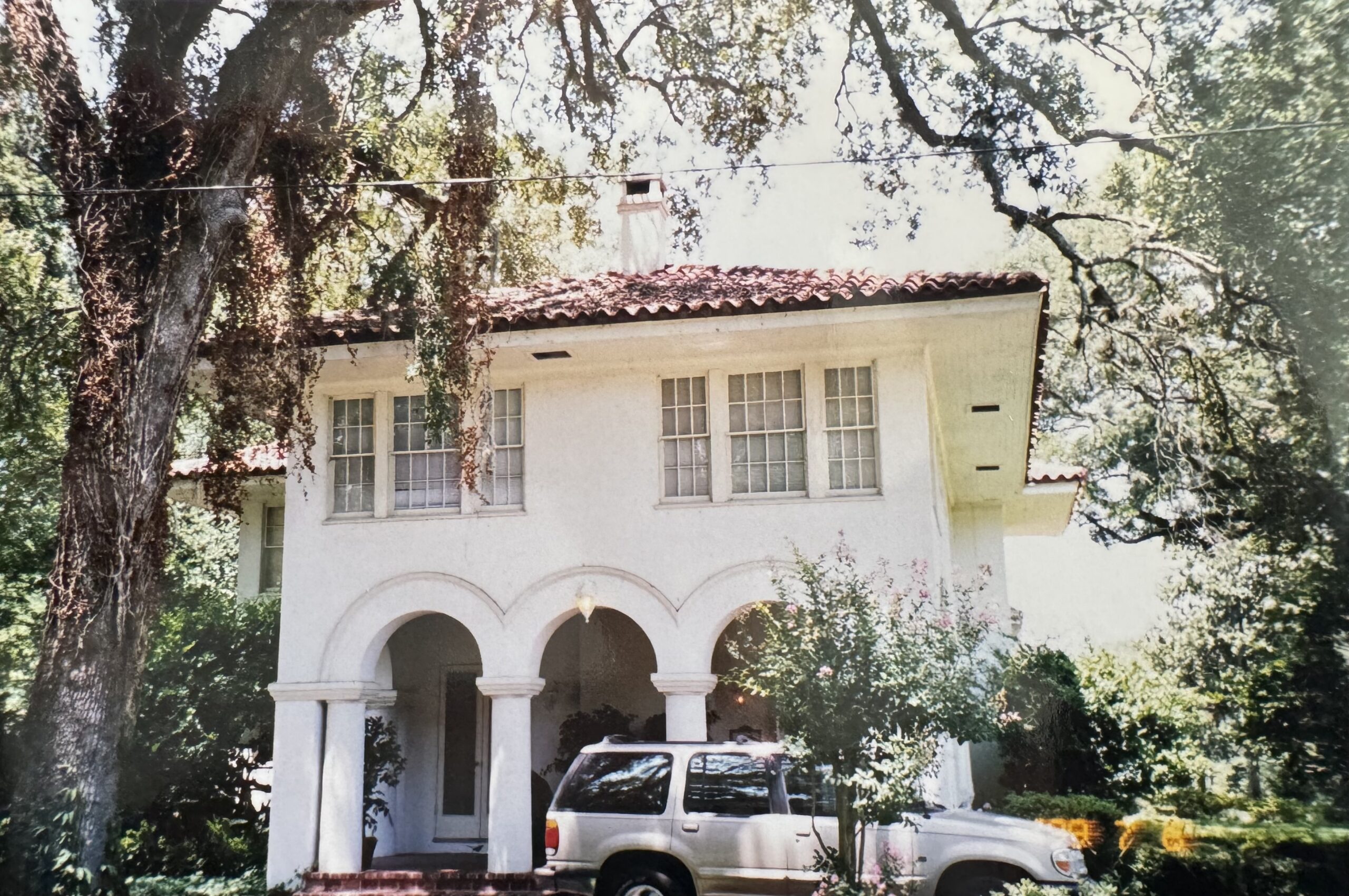
With the popularity of the Prairie School in early 20th-century Jacksonville neighborhoods, it’s no surprise the style appears on a site file for a home built in the 1920s. What is surprising is the home’s current appearance, dating back as far as 1999, with the original stucco and
1855 Ingleside Avenue, c. 2000, courtesy Riverside Avondale Preservation.
arch-lined portico, but also a terra cotta barrel-tiled roof—usually a telltale sign of Spanish or Mediterranean Revival. While hybrid-style properties are fairly abundant in the historic district, how would we reconcile these conflicting yet definitive styles attributed to the same home with many years in between? It’s all in the roof…
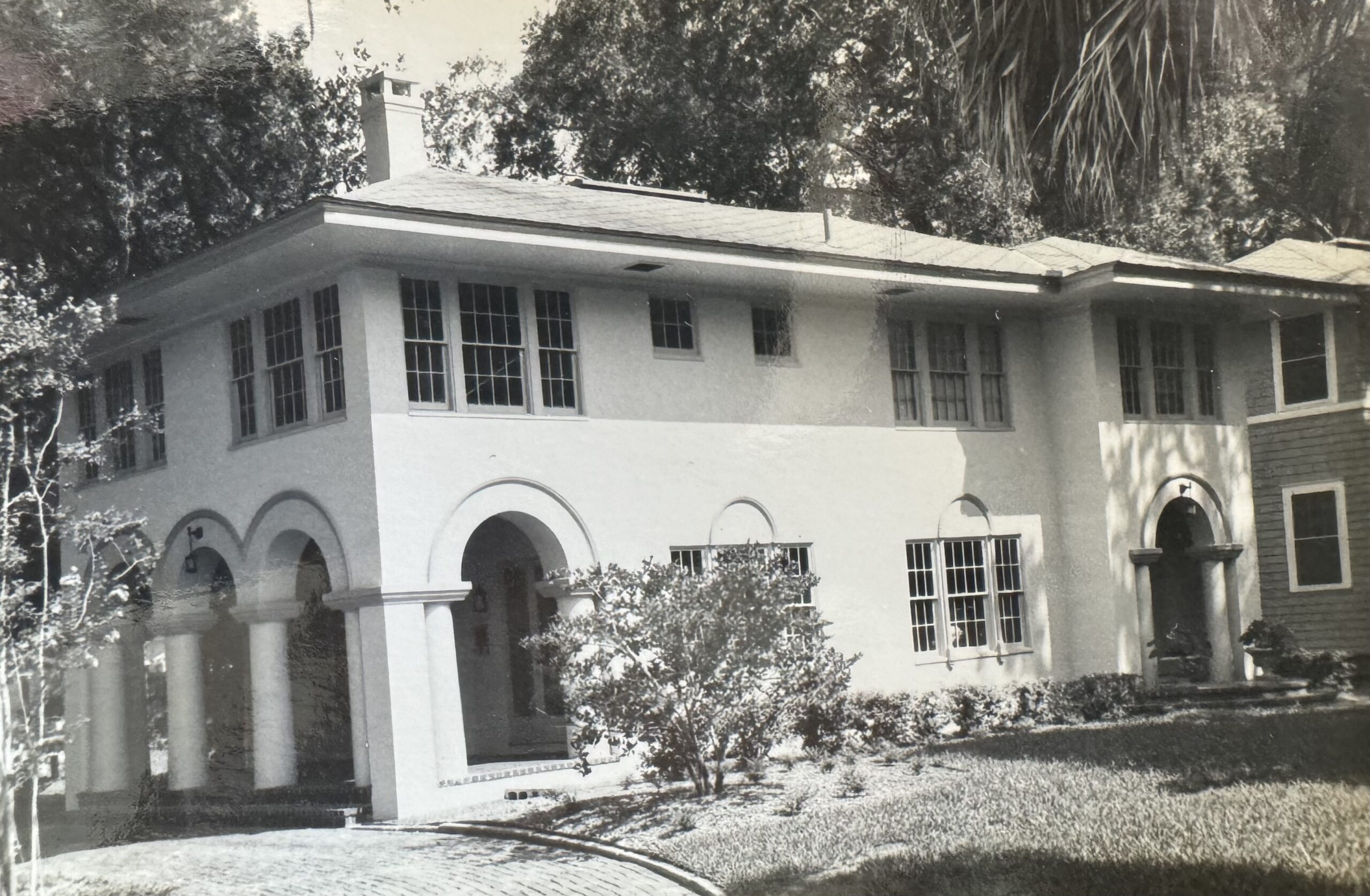
1855 Ingleside Avenue, 1989, courtesy Riverside Avondale Preservation.
… and a couple of other things. Until we found this black-and-white hard copy photo of 1855 Ingleside Avenue (above) in the physical site file, we didn’t know that the home originally had a flat-tile roof, quite different from the colorful barrel-tile we see today. Combine that with the broad overhanging eaves, windows grouped in horizontal bands, and the previously yellow-painted stucco (visible in header photo at top), the home does bear some resemblance to the Prairie School homes designed by Klutho and Buffalow.
Mizner’s Mediterranean in Florida
But what about the classical archways, entry portico, prominent columns, and white stucco exterior beautifully demonstrated on 1855 Ingleside Avenue? Even the site file, which designates the home as Prairie School style, admits the anomaly of the the home’s Mediterranean qualities, stating it’s “interesting in the use of round arches and massive round columns.” While Klutho and Buffalow were making a name for the Prairie School architectural style, Addison Mizner (1872–1933) was busy bringing the Mediterranean Revival style to Florida by way of Palm Beach.
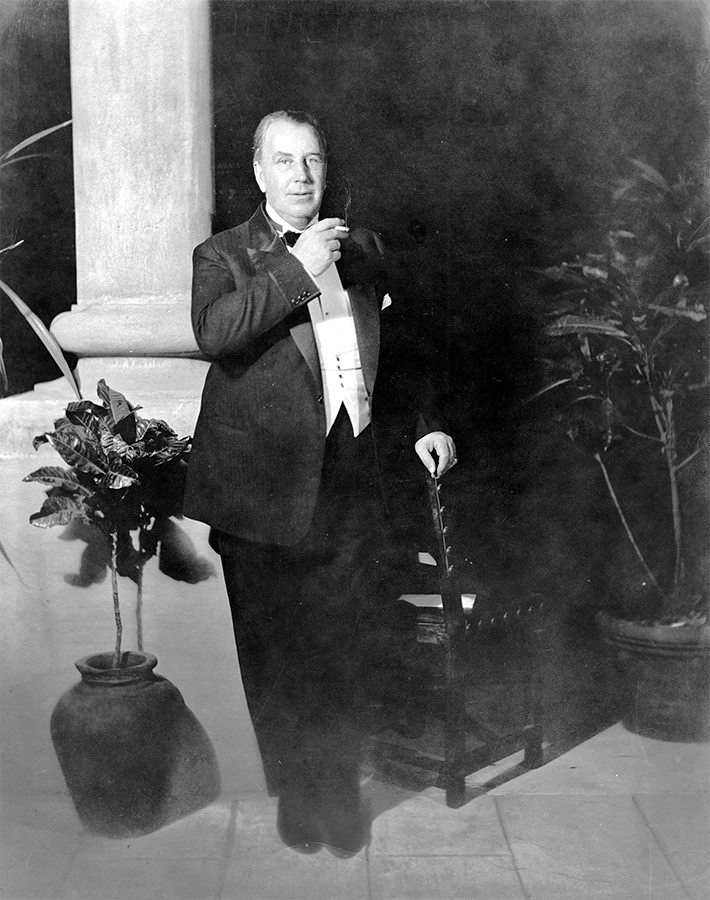
Addison Mizner, 1926, courtesy Historical Society of Palm Beach County.
As Mizner’s aesthetic, inspired by his many travels abroad, worked its way northward, his genius was exposed far beyond south Florida. We’re fortunate to have one extraordinary piece of Mizner’s Mediterranean imagination in the Riverside Church at Park and King, the singular church designed by Mizner in 1925. With these two enormously popular architectural styles—Prairie School and Mediterranean Revival—flooding the housing market in 1920s Jacksonville, we believe we have a truly stunning hybrid in 1855 Ingleside Avenue.
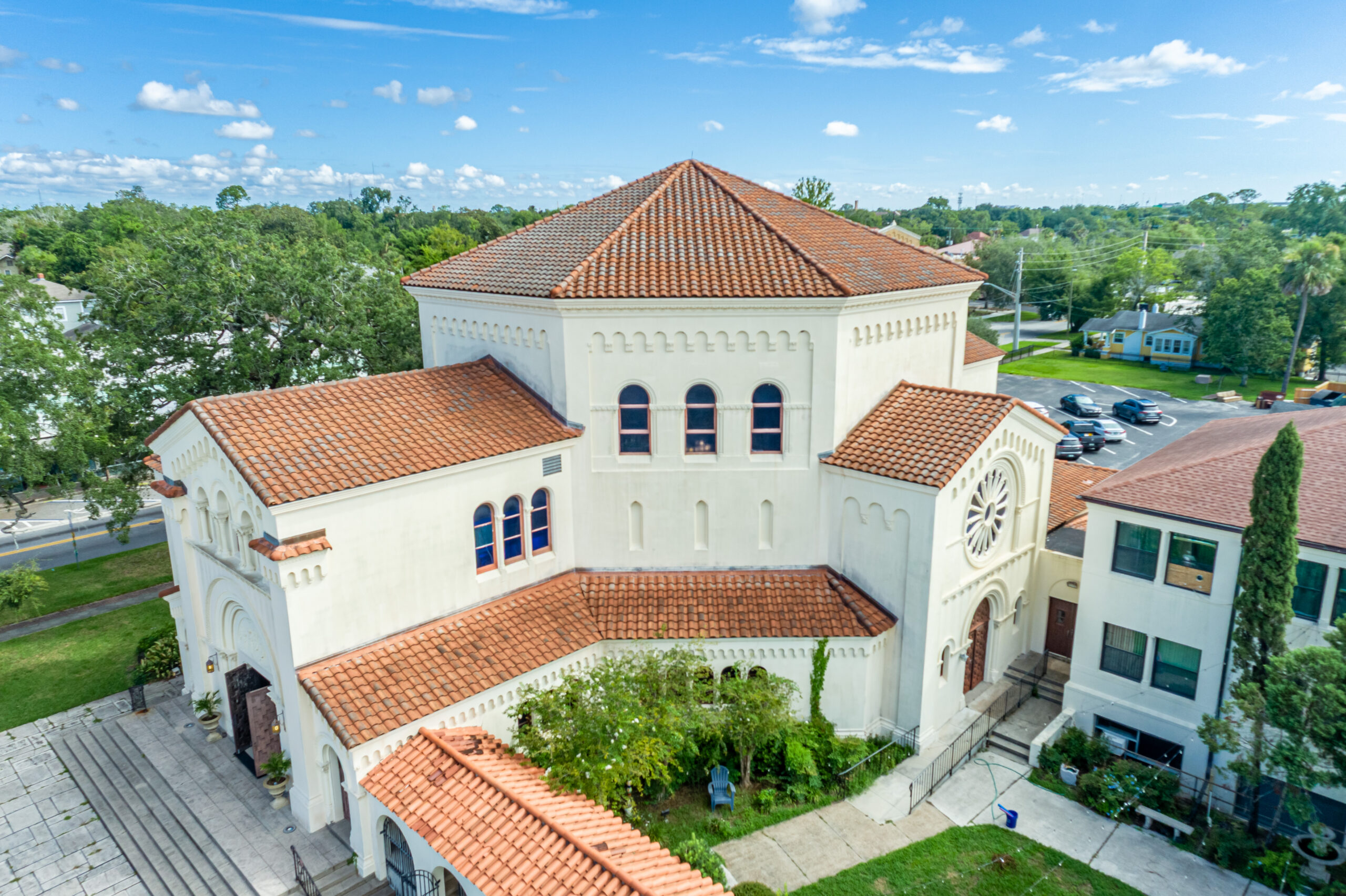
Riverside Church at Park and King, 2025, courtesy Riverside Church at Park and King.
Some Fun Historical Notes
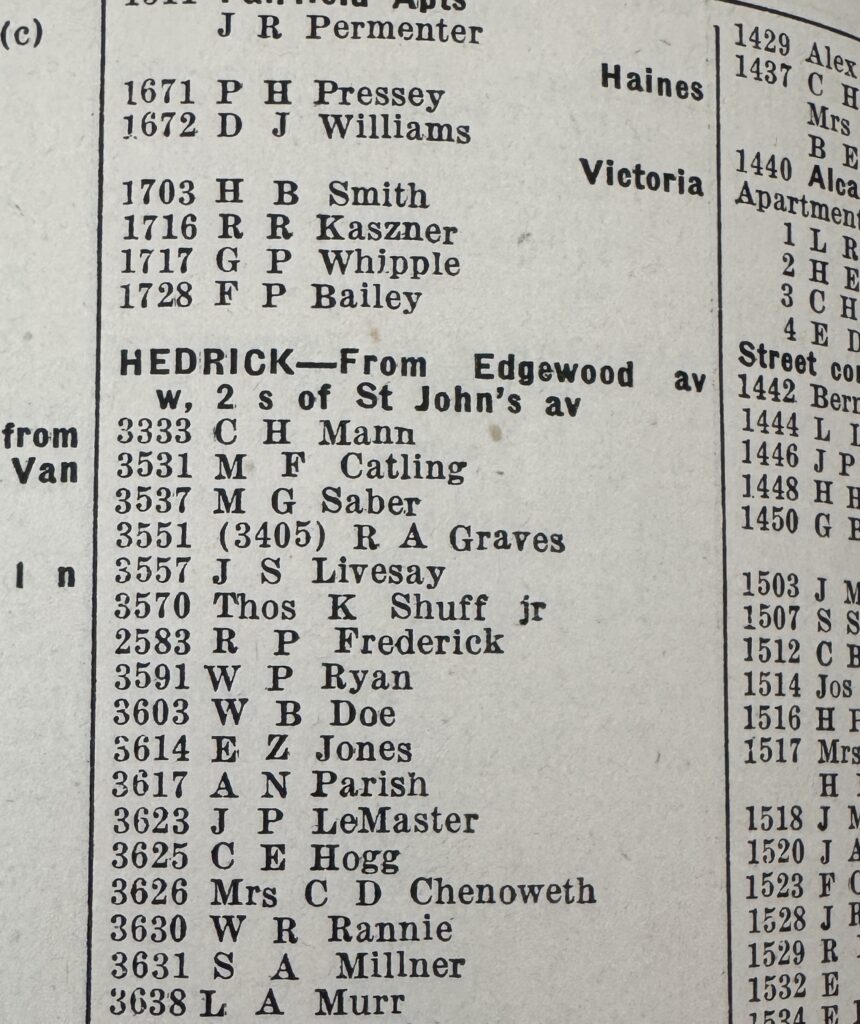
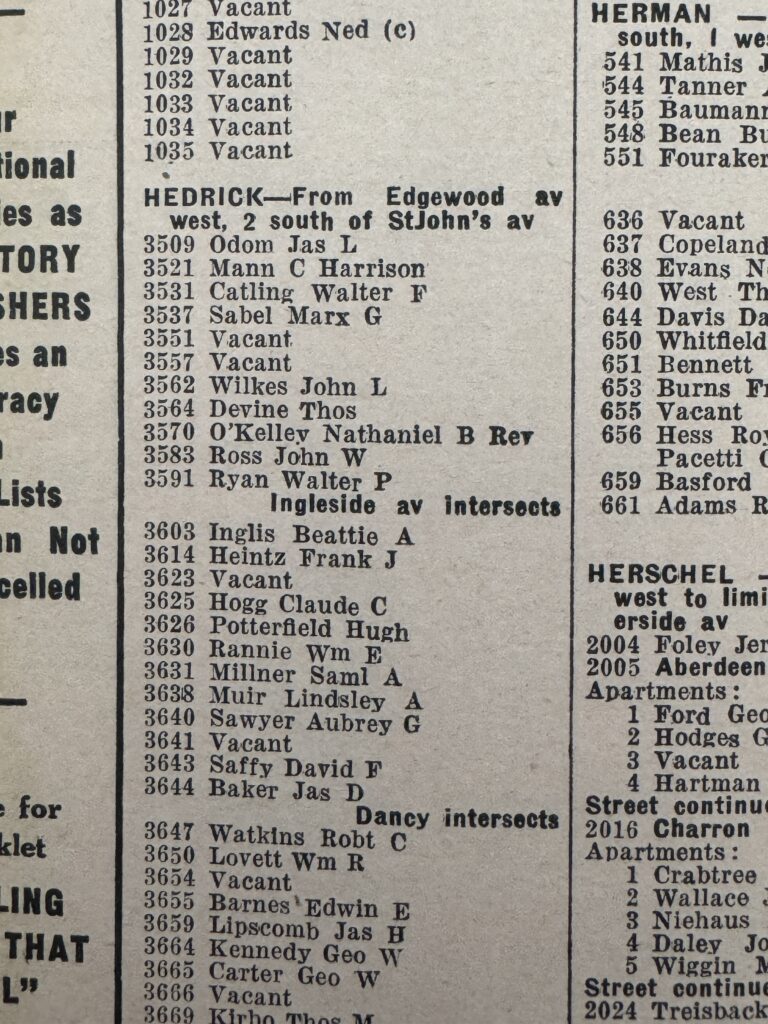
City Directories, 1927 (left) and 1930 (right), courtesy Jacksonville Public Library.
While the site file shows that this property was purchased by R. S. Smith in 1922, the home does not appear in the City Directory until 1927 (as 3603 Hedrick Street; as a corner lot, its address was later changed to Ingleside Avenue) with first residents William B. (a consulting engineer) and Flora Doe. By 1929, the property was vacant, but Beattie A. (president of Inglis Construction) and Kathleen L. Inglis moved in in 1930 and lived in the home for many years.
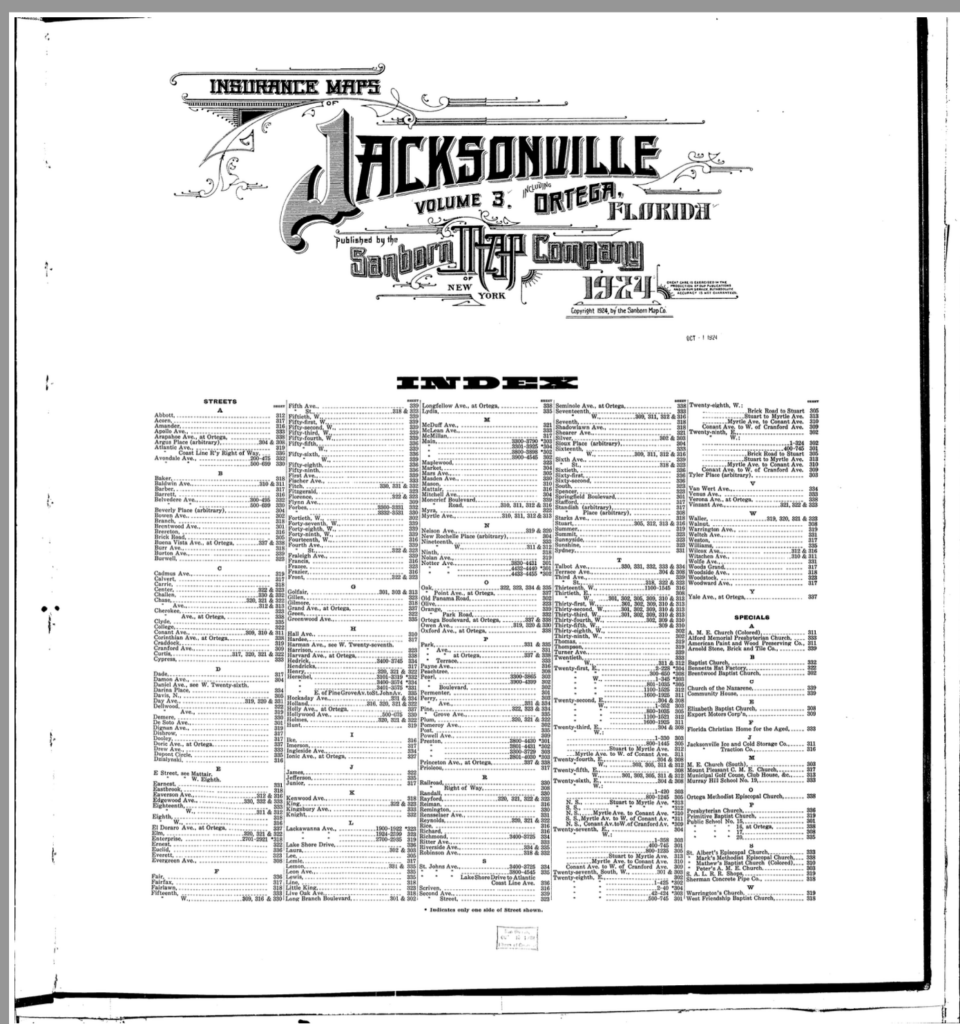
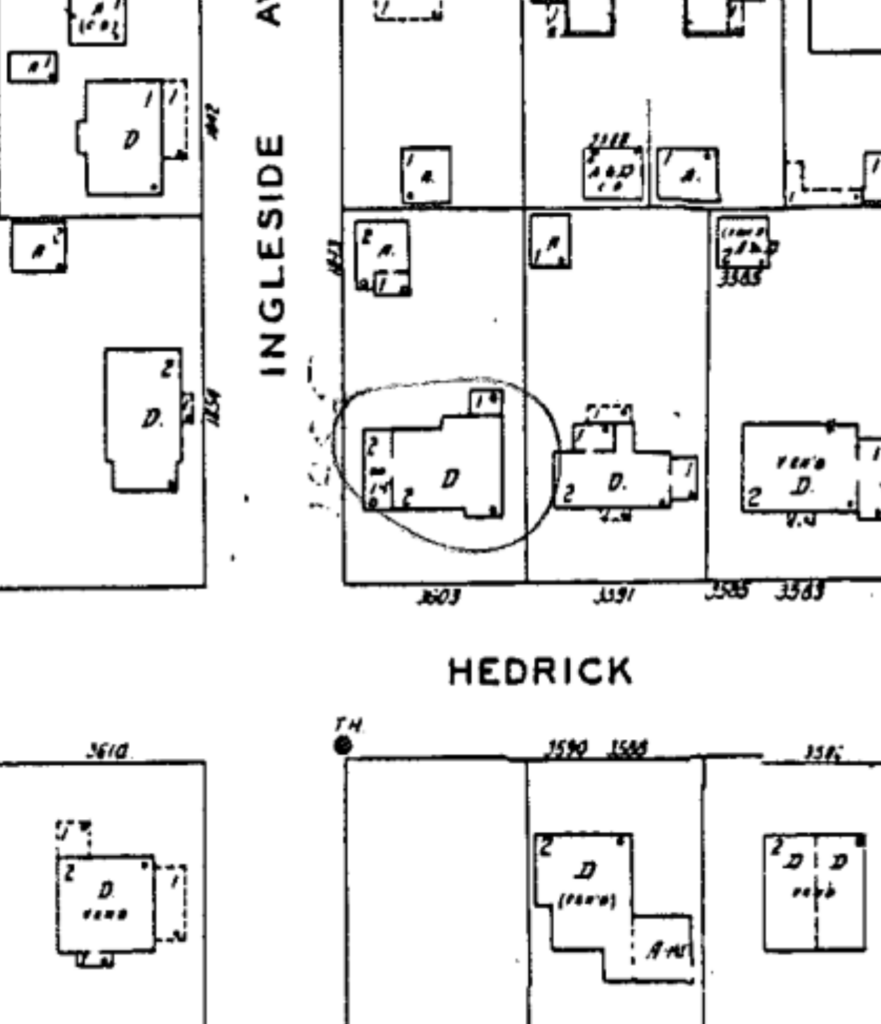
Jacksonville Sanborn Map, courtesy Jacksonville Public Library.
Henry Taylor & Son Co., listed in the site file as the builder of 1855 Ingleside Avenue, was a prolific developer in Riverside Avondale in the 1920s (at least 20 homes that we know of). Henry and Helen Taylor lived at 605 Challen (1309 Challen Avenue today; all the street numbers in the historic neighborhoods were adjusted in 1928) from about 1924 to 1925, according to the City Directories at the main library.
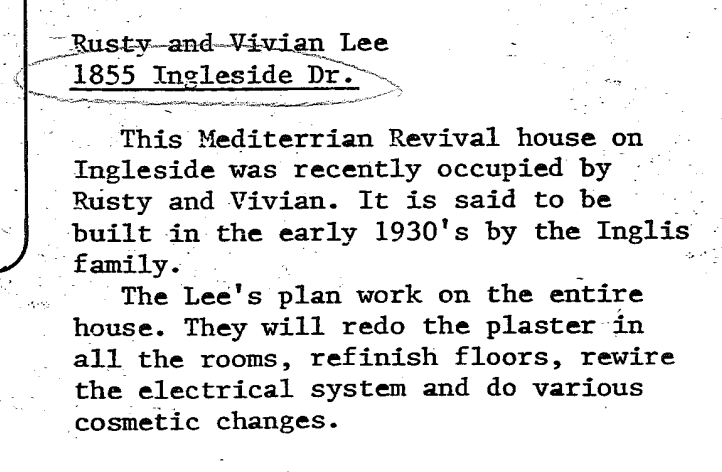
More recently, we know from RAP newsletters and archival materials that 1855 Ingleside Avenue was owned and renovated over the years by Rusty and Vivian Lee circa 1980 (left), Dr. Joe and Chrissie Pattison circa 2001 (when it was in the 27th Annual RAP Home Tour), and today by Ben and Jennifer Ketchum.
RAP Newsletter, June 1980, courtesy Riverside Avondale Preservation.
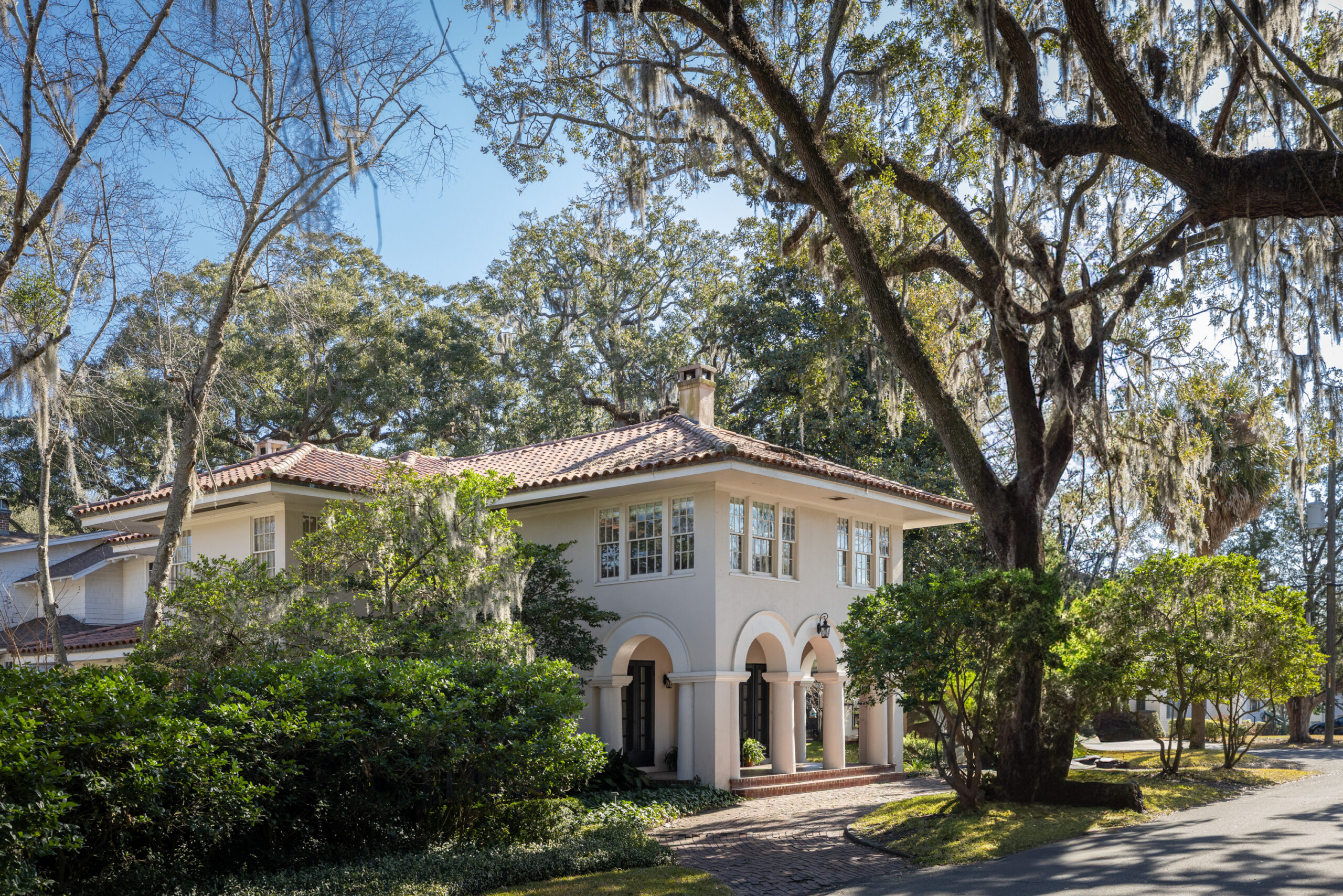
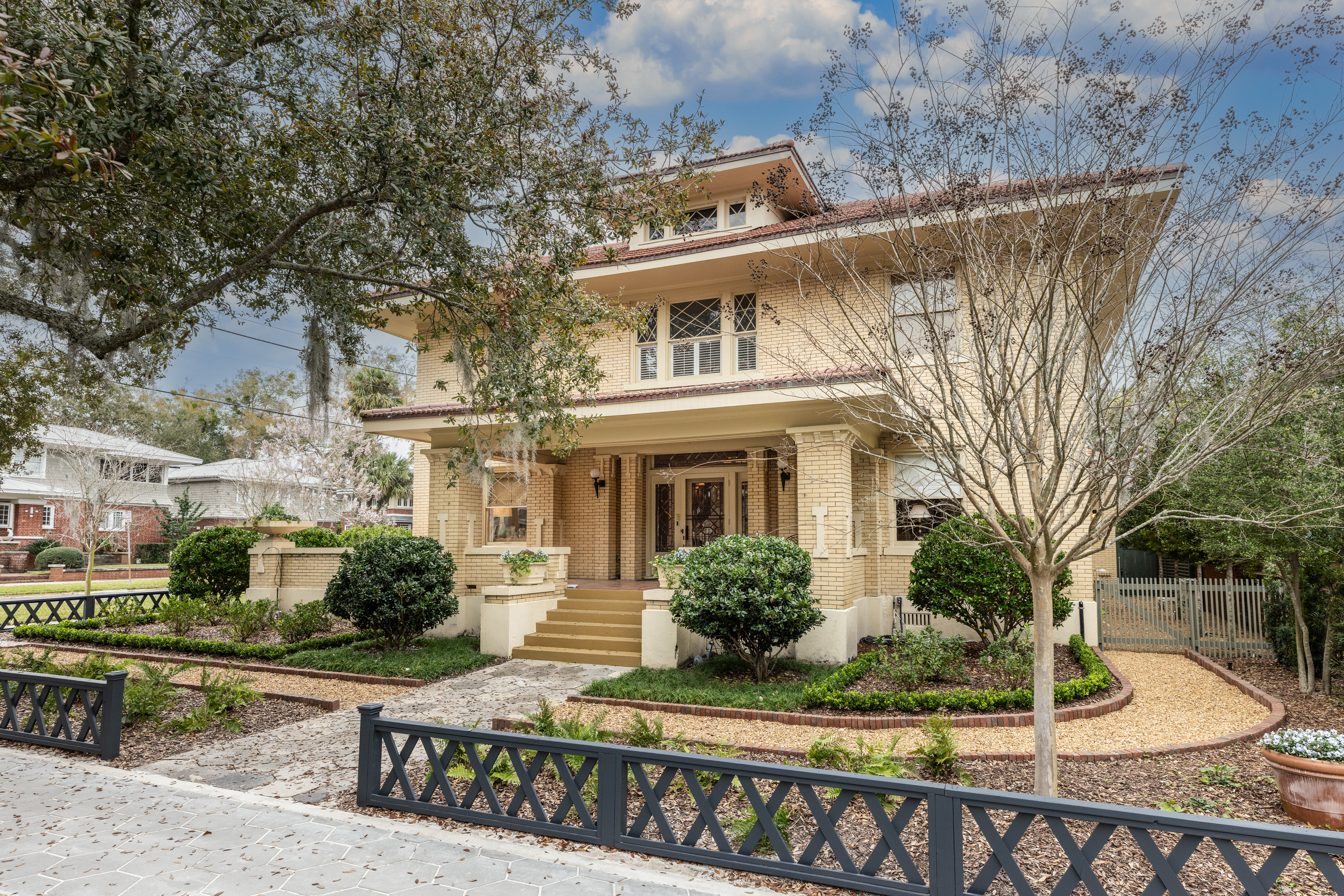
1855 Ingleside Avenue, 2026, courtesy Jacksonville Magazine.
The 52nd Annual RAP Home Tour
Want to learn even more about 1855 Ingleside Avenue and other historical properties of Riverside and Avondale? You’re warmly invited to the 52nd annual RAP Home Tour on April 11–12! Want the access-plus experience? We hope to see you at our kickoff soiree, the Twilight Party, on Thursday, April 9, at one of this year’s tour homes—1954 Greenwood Avenue. All proceeds benefit the mission of Riverside Avondale Preservation to enhance and preserve the architecture, history, culture, and economic vibrancy of the Riverside Avondale historic neighborhood. Learn more and purchase tickets here!