
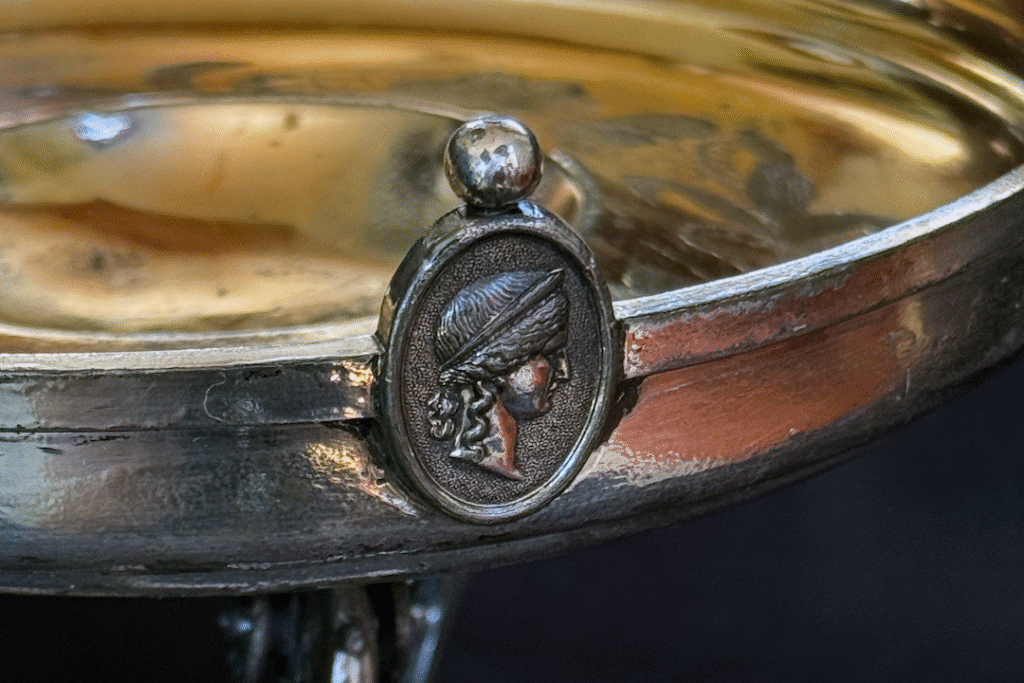
Above: Detail, Silverplate Wedding Cake Basket (style no. 1710) by Meriden Britannia Silver Co., Meriden, Conn., early 20th-century.
For the second event in our Collections Close-Up series, a new membership initiative providing behind-the-scenes, experiential activations for our supporters in a relaxed setting (learn more here), we explored the holiday and entertaining trends of the 1920s, many of which laid the foundation for traditions still popular today. Back in December, an intimate group gathered at the Buckland House for a prohibition-era cocktail workshop with mixologist Kurt Rogers of the Luau Lads. A presentation by RAP archivist Elaine Akin followed, featuring the history of early 20th-century American (and Floridian) social life and serving ware, with several physical examples of the latter on hand to admire.


Center: Kurt Rogers of the Luau Lads instructing attendees on cocktail mixing.

The Bucklands, who lived from 1912 to 1989 in the home that is now RAP headquarters at 2623 Herschel Street, left behind many beautiful serving pieces produced by some of our country’s oldest silver companies. These heirlooms were, collectively, the inspiration for this event and represent the spirit of the Roaring Twenties and the festive season.
Celebrate Good Times: After the War
Americans craved the comfort of more light-hearted times after the shock of World War I, which ended in 1918. US troops had returned home, and the mood was high. As a result of this consumerist activity, the economy was booming, life seemed good, fashion was changing, and many new conveniences were developed. More people lived in towns and cities than ever before, and liberal movements gained traction as the post-war culture shifted to a new normal.

U.S. soldiers celebrate Christmas on the WWI battlefield, courtesy National Geographic.
The decade of the twenties is perhaps most widely known for the flapper. Fueled by social and political changes such as women’s suffrage, increased access to education and jobs, and
the desire for new freedoms after World War I, the flapper symbolized a break from Victorian-era values for modern women. They challenged social norms by adopting a new, independent lifestyle that included short skirts and bobbed hair, dancing the Charleston, listening to jazz, and frequenting speakeasies. Simultaneously, there was, of course, the outlawed booze of the Prohibition Era, an effort to “reclaim public morals and health.” A single bottle of illicit Seagram’s smuggled down from Canada cost the equivalent of $142 in today’s currency once it reached New York City.
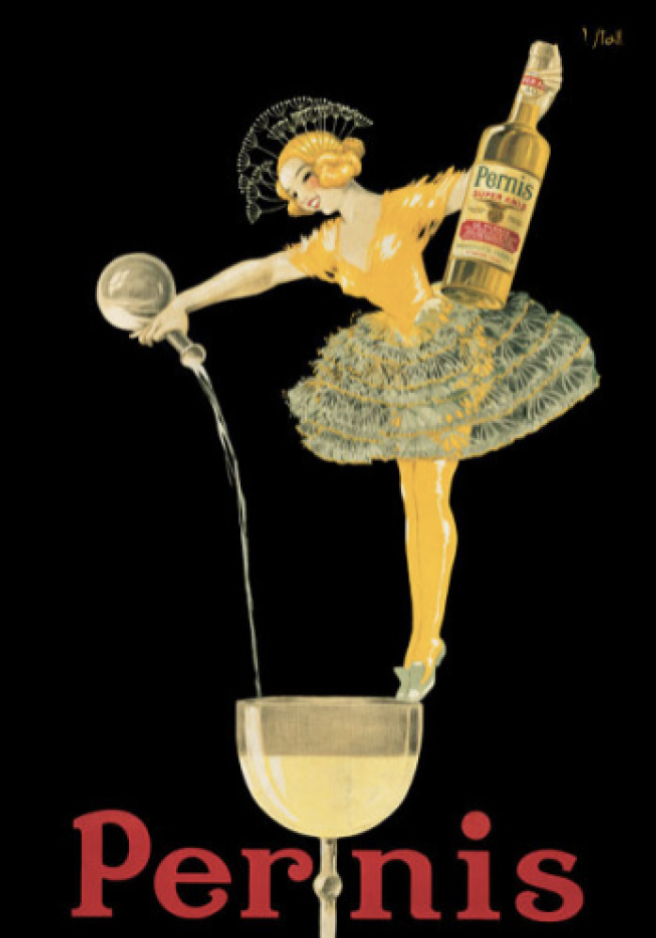
Pernis Wine print ad, c. 1920s, public domain.
A Roaring Jolly Christmas
In true capitalist form, beverage companies pivoted their ad campaigns to stay afloat during the “dry” spell. No better time to insert oneself in a famously liquor-heavy, celebratory occasion than Christmas. Wisconsin-based White Rock mineral water, for example, ran one of the earliest extended campaigns connecting Santa Claus and black-market alcohol in viewers’ subconscious minds. White Rock published print advertisements in Life Magazine featuring Santa at home, at work, and making deliveries drinking from the company’s beer-appearing bottles. The loophole: White Rock was merely carbonated water and ginger ale, but it was also used as a mixer for alcoholic drinks.


White Rock Ginger Ale Santa ads, Life Magazine, c. 1920s.
In keeping with the economic boom of the 1920s, the tradition of extravagant Christmases and its accompanying lengthy to-do list, not at all bizarre by 21st-century “classic Christmas” standards, became crystallized during this time. Elaborately decorated trees, holiday cards, string lights, gift giving, lavish feasts, and the widespread use of the jelly-bellied Santa Claus image originated thanks to blossoming Western prosperity. Paper decorations were typical, including the ubiquitous red tissue honeycomb bell, as well as strings of popcorn, colorful ribbons, red berries, and “Snow Babies” figurines. Ultra-flammable silver tinsel such as Lametta, manufactured in Germany and made of lead alloy foil with tin bonded on top, or paper-covered aluminum was not yet eclipsed by cool LED string lights or plastic-based garland.

The elites of New York party on Jekyll Island, Ga., c. 1920s, courtesy Jekyll Island Museum.
The Prohibition Era also embraced new technology and design during the Christmas season. In the past, revelers would travel “over the river and through the woods” by horse-drawn sleigh or buggy. By the 1920s, however, they traveled to grandma’s house by motorcar or train. The public got their fix of nostalgia from Victorian literature, harkening to the world of Charles Dickens. There were four different film versions of “A Christmas Carol,” and magazine covers often depicted scenes with the flavor of “merry old England.”
Right on theme, Norman Rockwell’s cover for The Saturday Evening Post’s December 3, 1921, issue depicted a ruddy-cheeked, pseudo-Dickensian coachman in a Victorian top hat and collar with holly on his lapel.
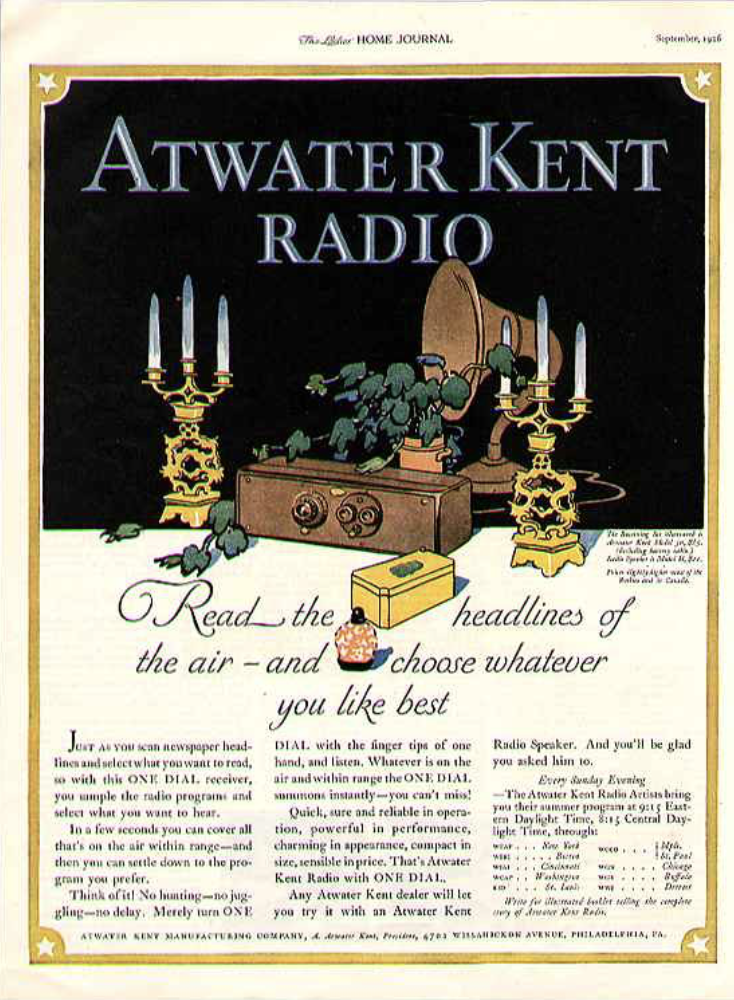
And as radio and gramophone ownership increased (and advertisements!), so did the demand for seasonal songs. Chart-topping Christmas songs of the ’20s included “Adeste Fideles,” “Auld Lang Syne,” and “Parade of the Wooden Soldiers,” all repeat hits.
Atwater Kent Radio ad in The Ladies’ Home Journal, September 1926, public domain.
I’ll Be Home for Christmas
The State Library and Archives of Florida is a bountiful resource for photos of early 20th-century Jacksonville and the surrounding area. The Kalem Company was an early American film studio founded in New York City in 1907. It was one of the first companies to make films abroad and to set up winter production facilities, first in Florida and then in California. Kalem’s winter studios occupied outbuildings on the grounds of the old Roseland Hotel on the St. Johns River near Jacksonville, the property’s cannons used in Kalem’s Civil War-themed productions.
Just 75 miles from Jacksonville, the ultra-exclusive Jekyll Island Club played host to “American royal” families such as the Rockefellers, Vanderbilts, Pulitzers, and Astors, who comprised one-sixth of the world’s wealth at one time. These industrialists fled from their extravagant homes in the wintry urban North for the easy gentility of the warm, sunny island.

Merry Christmas from Kalem Studios, Jacksonville, Fl., 1909, courtesy Florida Memory.
And of course, there were holiday parties (see photo above). Many families came down for the season before Christmas, even as early as Thanksgiving. Christmas on the island was recorded by Munsey’s Magazine in 1904: “Each winter the club opens for a Christmas Dinner, and the members come and go until warm weather drives them away toward the end of April.”

Left to right: Snowball fight on the steps of the capitol in Tallahassee, Fl., 1899, courtesy Florida Memory; Christmas dinner menu at San Juan Hotel, Orlando, Fl., 1900, public domain.
Dining with the Bucklands
When the Buckland House was generously bequeathed in 1990 to Riverside Avondale Preservation to use for its offices by the Bucklands’ distant Ohio cousin Helen Chatfield Black, many of the family’s personal possessions were left in the home, as well. They are now part of the Buckland Family Collection in RAP’s archives. Considering the remaining fine silver pieces used for dining and entertaining guests, one can only imagine George, Grace, Mary, and Charlotte sitting in the parlor with tea service or around the dinner table with platters of food accompanied by their friends and relatives.
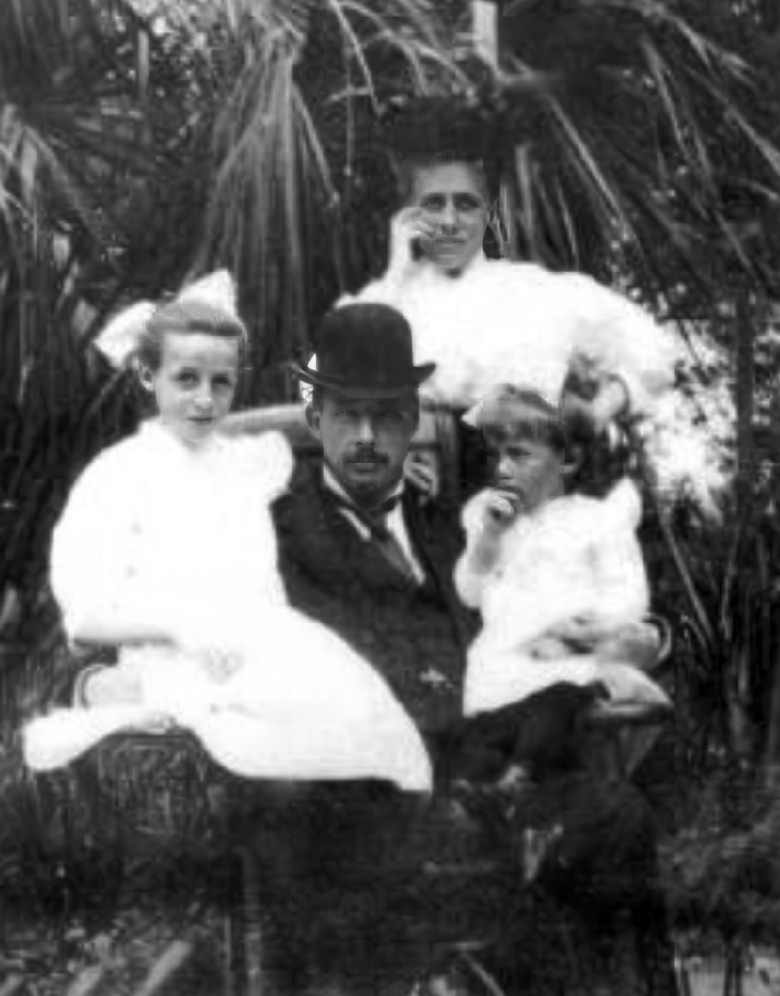
Falling into the upper-middle class, the Bucklands owned a slew of serving pieces by all the big names in American silver. Often engraved with the name “Buckland” or “Huntington” (Grace’s maiden name), quintessential forms of exceptional craftsmanship by the likes of Gorham Co., Meriden Britannia Co., Reed & Barton, Tiffany & Co., Duhme & Co., Derby Silver, and Wood & Hughes adorn the parlor of the Buckland House today for public display and education. Teapots, creamers, sugars, platters, candlesticks and more remind viewers of bygone times when the “good stuff” was used on a daily basis.
The Buckland family in Florida, c. 1910s.


Left to right: Silverplate claw-footed teapot with stylized lion finial on lid (style no. 2405) by Reed & Barton, Taunton, Mass., c. 1900; Gorham Co. stamp on bottom of oval serving dish, Providence, RI., c. early 20th-century; Sterling silver creamer by Tiffany & Co., New York, NY., before 1891.
All Collections Close-Up attendees went home with a champagne flute stuffed with original cocktail recipes by the Luau Lads, and enjoyed delicious bites provided by Cork Thyme Wine Bar and Bodega. Many thanks to all of our generous sponsors!
